

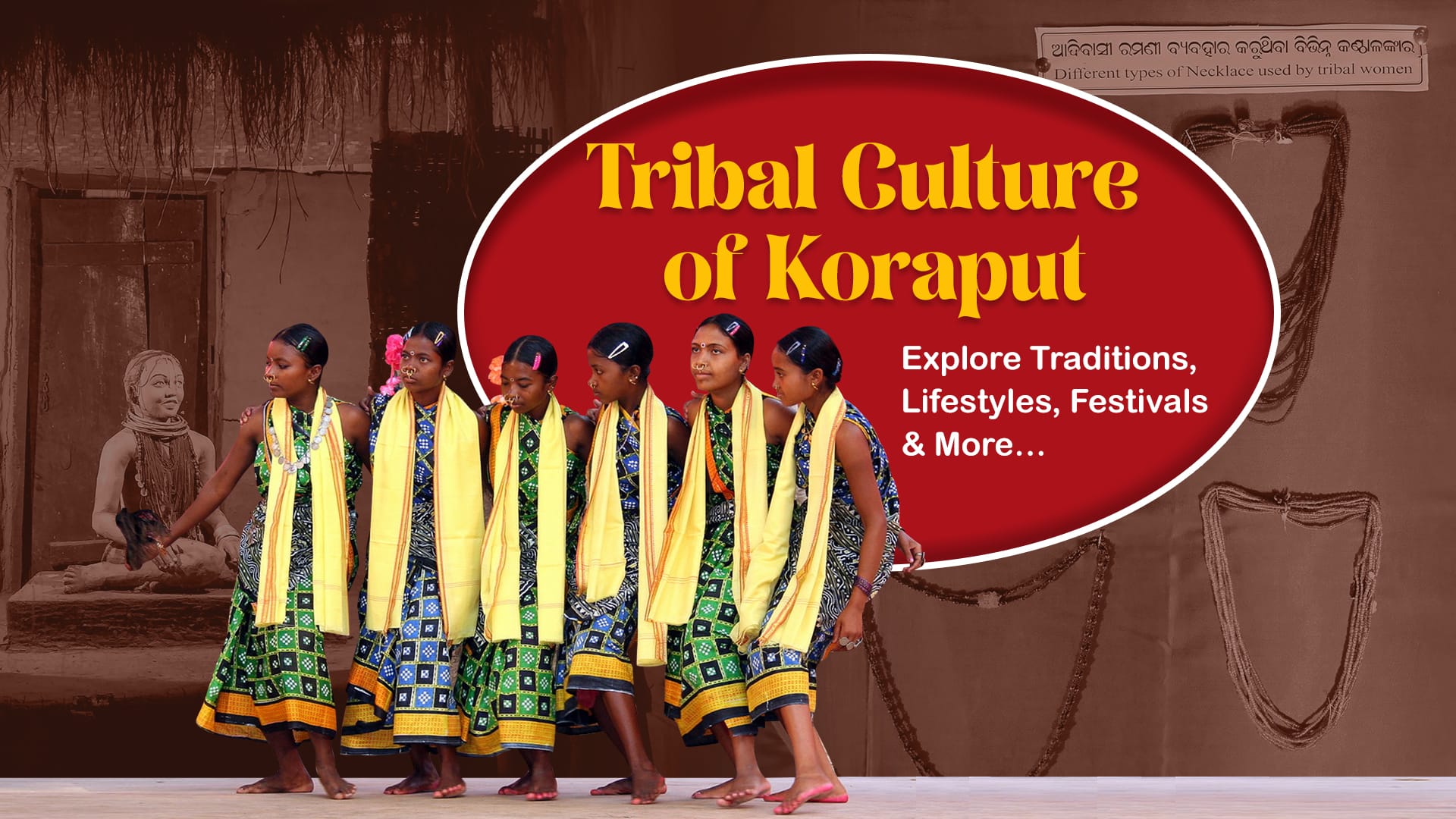
Tribal Culture of Koraput is not something you merely observe, it is something you feel. Tucked deep within the lush folds of the Eastern Ghats, Koraput is a living archive of century old wisdom, where time moves gently, guided by forests, rivers, and rituals passed down through generations.
This region in southern Odisha is home to some of the most vibrant indigenous communities of Odisha, making it one of the richest cultural landscapes among the ancient tribes of India.
A Living Tapestry of Tribes and Landscapes
Koraput is home to diverse tribes of Odisha such as the Gadaba, Paraja, Bonda, Duruwa, Bhumia, and Kondha. Each tribe carries its own language, customs, attire, and belief systems, yet all remain deeply connected to the land. This deep bond defines the Eastern Ghats culture, where forests are sacred, hills are ancestral, and rivers are living spirits.
The Koraput Tribal Lifestyle revolves around agriculture, forest produce, and community living. Millets, rice, pulses, and seasonal vegetables form the backbone of daily life. Farming is not just an occupation here, it is a ritual, a celebration, and a prayer offered to nature.
Lifestyle of Indigenous Tribes: Harmony Over Hurry
The lifestyle of indigenous tribes in Koraput is shaped by simplicity and sustainability. Homes made of mud walls and thatched roofs blend seamlessly into the surroundings. Villages function as close-knit units where decisions are taken collectively, guided by elders and traditions.
Nature worship plays a vital role in daily life. Forest deities, ancestral spirits, and earth gods are revered through seasonal rituals. These beliefs form the foundation of the tribal customs of Koraput, where spirituality and ecology walk hand in hand.
Tribal Clothing, Ornaments, and Identity:
One of the most striking aspects of the tribal heritage of Koraput is its visual richness. Tribal clothing and ornaments are not just decorative, they signify identity, marital status, and social belonging. Women often wear handwoven fabrics, bead necklaces, silver jewellery, and brass ornaments, while men adorn themselves with traditional wraps and headgear.
Koraput is also closely linked with the famous Kotpad textile, which is India’s first GI tagged tribal textile known for its deep red and brown hues dyed using natural tree bark. This textile is a shining example of excellent tribal art and handicrafts, where skill, sustainability, and heritage blend together.
Music, Dance, and Festivals:
Festivals breathe life into the tribal culture of Koraput. The most iconic among them is the Parab Festival, a grand celebration of unity among tribes. The cultural significance of this Festival lies in its role as a platform where communities showcase their dances, music, rituals, crafts, and food.
Tribal festivals of Koraput are incomplete without traditional tribal dances like Dhemsa, performed in rhythmic circles, accompanied by drums, flutes, and gongs. Tribal music here is raw, earthy, and deeply emotional, echoing the sounds of forests and flowing streams.
Traditional Tribal Food:
Traditional tribal food in Koraput is wholesome and seasonal. Millets like ragi, indigenous rice varieties, forest greens, tubers, bamboo shoots, and locally sourced fish or meat define the cuisine. Cooking methods are simple – boiled, roasted, or slow-cooked, allowing natural flavours to shine.
Fermented rice beverages are prepared during festivals and communal gatherings, strengthening social bonds and celebrating abundance.
This region is also famous for its Koraput tribal coffee, grown on shaded hill slopes and forest edges using traditional, chemical-free methods. Carefully handpicked and sun-dried, this coffee carries earthy, mild, and naturally sweet notes that’s an honest reflection of the land it comes from.
Koraput Tribal Market and Weekly Haat:
The Koraput tribal market, locally known as the haat, is the heartbeat of rural life. These markets are not just economic spaces but vibrant social arenas. Farmers, artisans, and foragers gather to trade vegetables, forest produce, handmade tools, textiles, ornaments and many more.
Walking through a tribal haat is like stepping into a moving museum, which is alive with colours, conversations, and centuries-old practices still thriving in modern times.
Live Within the Tribal Rhythm Amid Nature: Camping with Gokoraput
Camping with Gokoraput Offers a meaningful way to experience the tribal culture beyond observation. Surrounded by the forests and hills of the Eastern Ghats, the campsite on Talamali Hills reflects the same landscapes that shape the daily life, food habits, and traditions of the indigenous communities.
Staying close to tribal settlements allows visitors to witness everyday routines, such as traditional cooking, storytelling, and music by revealing how nature and culture remain inseparable. Evenings around a shared fire echo the communal spirit seen during tribal festivals of Koraput, where tribal music and oral traditions keep heritage alive.
Framed by rich Eastern Ghats biodiversity, misty hills, and nearby waterfalls in Koraput, Gokoraput blends culture with conservation. This form of eco-tourism makes Camping in Koraput a thoughtful addition to Koraput tourism, highlighting it as one of Odisha’s most soulful offbeat destinations and best winter picnic locations.
A Culture That Still Breathes
The Tribal Culture of Koraput stands as a reminder that progress does not always mean abandoning the past. Here, tradition and nature coexist with dignity and grace. From festivals and food to markets and music, this vibrant culture continues to thrive – rooted deeply in the soil of the Eastern Ghats, yet open to the world with quiet pride.